

Twinsburg is one of those cities where the house can tell you a lot before you even get to the equipment. Near Twinsburg Square and the older streets off Darrow Road, we still see mid-century ranches and split-levels. Head toward Ethan’s Green, the Glenwood corridor, or newer development around Reminderville, and the homes get larger, the floor plans open up, and the HVAC and electrical systems become more involved.
P.K. Wadsworth provides heating, cooling, plumbing, electrical, and indoor air quality service throughout Twinsburg. Call (440) 588-3025 or contact us online when something in your home needs attention.
You Can See Twinsburg’s Growth in Its Homes
Twinsburg grew quickly during the 1980s and 1990s, and that era still defines a large part of the city’s housing stock. Two-story colonials with attached garages, larger kitchens, multiple living areas, and second-floor bedroom wings are common throughout established subdivisions. Ethan’s Green is a good example, with upscale single-family homes and townhouses built around larger, more involved residential systems.
Closer to Twinsburg Square, the housing changes. Ranches and split-levels from the 1950s through the 1970s tend to have simpler mechanical layouts, while modern construction around Reminderville brings open concepts, high ceilings, newer controls, and larger electrical demands. The age and layout of the house usually give us the first clues about where a comfort or service problem may be coming from.
Furnace & Heating Service in Twinsburg, OH
Homes around Twinsburg may rely on gas furnaces and forced-air ductwork, but the size of the house makes a big difference in how well those systems perform. A ranch near the Square may be easier to balance than a large colonial where the furnace is trying to serve an expansive first floor and bedrooms a full story above it.
Our heating services include:
Twinsburg sits along the secondary snowbelt, so heavy, wet snow and long freezing stretches can keep furnaces running for hours at a time. In larger colonials, cold upstairs bedrooms do not automatically point to a bad furnace. Zoning, long duct runs, and airflow between floors can all affect how evenly the house heats.
Electrical Repair & Upgrades in Twinsburg, OH

Homes built during Twinsburg’s 1980s and 1990s growth boom may have more electrical capacity than homes in older Cleveland-area suburbs, but present-day needs can still exceed the original design. EV chargers, home offices, large kitchen appliances, multiple HVAC zones, and entertainment systems can change what a panel needs to support.
P.K. Wadsworth provides electrical services including:
Twinsburg’s weather and commercial growth add another consideration. Heavy snow can pull on trees and utility lines, while summer storms bring high winds, lightning, and intense downpours. Before another large electrical load goes onto the system, the existing panel, service size, and protection already in place need to be understood first.
Plumbing, Drain & Water Heater Service in Twinsburg, OH

Plumbing systems here vary a lot by neighborhood. Older homes around the Square may have seen several rounds of repairs and remodeling, while the larger colonials in neighborhoods like Ethan’s Green may have more bathrooms, finished lower levels, bigger kitchens, and more fixtures feeding into the system.
P.K. Wadsworth provides plumbing services including:
Finished basements are common in many of Twinsburg’s larger homes, so a small leak downstairs can damage flooring, drywall, or stored belongings before it becomes obvious. Severe summer storm cells can also drop a lot of rain quickly, making sump and drainage systems especially important. The location of the water and the way the basement is finished often tell us more than the visible symptom alone.
Indoor Air Quality for Twinsburg’s Changing Seasons
Twinsburg can move from heating weather to cooling weather quickly during spring and fall. Summer brings muggy air, while long winter heating cycles can dry a house out. In a large two-story home, the difference between the basement, main floor, and upstairs bedrooms can be noticeable.
P.K. Wadsworth installs and services:
A finished basement along the Glenwood corridor may need summer moisture control while the second floor of the same house has a completely different comfort issue. Larger floor plans can also make filtration and humidity balance harder to manage evenly. The best setup depends on where the problem shows up and how air is already moving through the house.
AC Repair, Maintenance & Replacement in Twinsburg, OH

Cooling is where Twinsburg’s larger suburban floor plans really start to matter. Many of the colonials built from the 1980s through the 2000s have open first floors, high ceilings, long duct runs, and second-floor bedrooms that can be difficult to cool evenly with a single thermostat.
P.K. Wadsworth provides air conditioning services including:
Once temperatures climb into the mid-80s and 90s and the humidity settles in, weak airflow becomes much easier to notice. Multi-zone systems may be an option in larger Twinsburg homes, and ductless mini-splits can work well in sunrooms, finished basements, or additions. A warmer second floor can sometimes be corrected through airflow or zoning changes without simply increasing AC size.
Why Local Experience Matters in Twinsburg
Twinsburg is not made up of one generation of homes. A morning appointment near Darrow Road might be in a straightforward mid-century ranch, while the next stop in Ethan’s Green could involve multiple HVAC zones, a finished basement, a larger electrical service, and a much more complicated floor plan.
Those differences help narrow down where the trouble is likely to start. Warm bedrooms in a large colonial may point toward zoning. A new EV charger may expose a panel limitation, while basement moisture after a storm may turn out to be a drainage issue rather than a leaking pipe.
P.K. Wadsworth technicians also make a point of explaining what they find and taking care of the property while they work.
Schedule Service in Twinsburg
A ranch near Twinsburg Square, a large colonial in Ethan’s Green, and a newer home toward Reminderville may all need completely different solutions even when the homeowner describes the same problem. Floor plan, equipment age, zoning, finished spaces, electrical demand, and Twinsburg’s snowbelt weather all shape the way the job should be handled.
Call P.K. Wadsworth at (440) 588-3025 or contact us online to schedule heating, cooling, plumbing, electrical, or indoor air quality service in Twinsburg, OH 44087.
Recent Jobs and Reviews in Twinsburg, OH
Twinsburg, OH at a glance
P.K. Wadsworth Heating, Cooling, Plumbing and Electric has completed 20 jobs in Twinsburg, OH in November 2026.
The most recent job was on November 17, 2026.
P.K. Wadsworth Heating, Cooling, Plumbing and Electric has completed 354 jobs in Twinsburg, OH in the last 12 months.
Job Locations and Reviews


Performed scheduled heating maintenance on the furnace, inspecting the blower assembly and noting dust and debris accumulation on the squirrel-cage wheel blades and housing. Verified blower motor operation with a true RMS clamp meter, measuring 4.09 amps on the motor circuit and confirming electrical readings within normal range, and inspected control board wiring and cabinet components for secure connections and wear.


Performed scheduled preventive maintenance on an upright gas furnace, removing the front access panel to inspect the inducer/blower motor, pressure switch, gas manifold, control board, and wiring harnesses. Used a clamp meter to take electrical measurements on the control wiring and verify proper circuit operation, noting light dust accumulation on interior surfaces. Furnace was found operational with no faults identified at the time of service.


Responded to a no-heat complaint where the furnace was running but not producing warm air, and replaced the furnace control board. Verified operation with a digital manometer (static pressure reading of -0.862 in. w.c. on the return side) and measured supply plenum temperature at approximately 198°F, confirming the unit is now producing heat.


Replaced the defective control board under warranty and installed a surge protector to safeguard the new board from future electrical events. Also performed routine maintenance on the gas furnace, including cleaning accumulated dust and debris from the unit, and verified proper system operation upon completion.
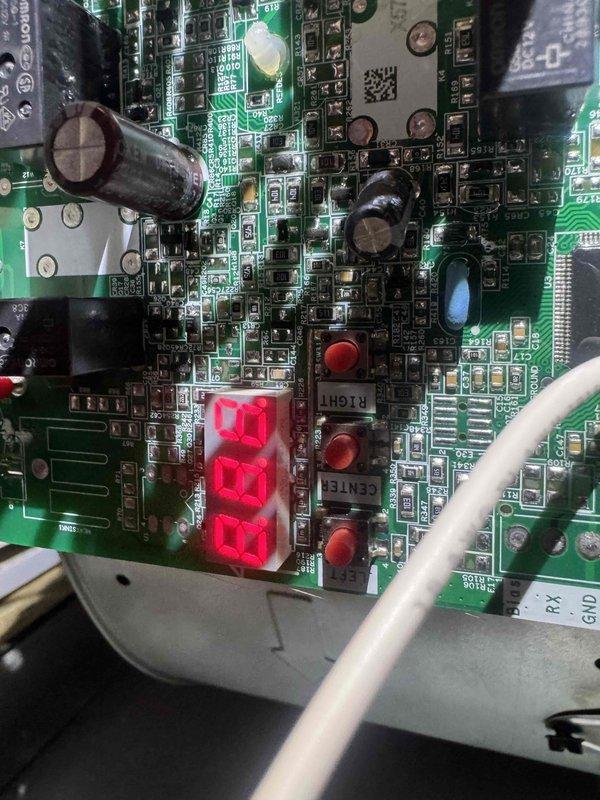
Responded to a no-heat complaint with the thermostat set to 68°F and the space reading 70°F, with the furnace housing cool to the touch. Inspected the furnace control board and confirmed active diagnostic output on the integrated display, then reviewed the status code to evaluate ignition and call-for-heat operation. Verified control board power and communication, and tested thermostat and system response to restore proper heating operation.


Responded to a report that the whole-home humidifier was not operating during heating cycles and showed no indicator light, and inspected the furnace cabinet, control board wiring, and humidifier supply and drain connections to verify proper power and operation. Documented the condition of the wiring and components with photos.


Performed scheduled heating maintenance on a gas furnace, including removal of the access panel and vacuuming of the burner compartment and blower area to clear dust and debris. Inspected the gas valve, pressure switch, blower motor and housing, burner assemblies, and wiring harness, and verified the integrated control board and terminal connections were secure. No rust, corrosion, burn marks, or component damage was found, and the unit was left in clean, proper working condition.


Responded to a complaint of the furnace failing to reach the 70°F setpoint, with the space holding at 67°F. Inspected the furnace control board and low-voltage wiring harness, including relay, terminal header, and connector points, and found no evidence of burning, corrosion, or physical damage. Noted tape and adhesive residue on the board's transformer bracket and a wire connector overlapping a component, and verified all connections were secure and properly routed.


Performed scheduled heating maintenance on a gas furnace, including inspection of the burner assembly, igniter/flame sensor, and control wiring. Observed burner operation during a heat cycle and verified ignition and flame presence, noting a more orange flame on one burner indicating possible need for burner cleaning or combustion adjustment. Measured electrical current with a clamp meter and inspected the air filter and cabinet interior, finding no visible frost, rust, or damage.


Performed seasonal maintenance on the heating system, including inspection of the air handler cabinet, return air filter housing, and supply ductwork. Used a digital thermometer to measure supply duct temperature, recording approximately 138°F, which is within the normal operating range for a gas furnace. No visible damage, corrosion, or air leakage was observed on the ductwork, and the system was left operating normally.


Performed a seasonal heating tune-up, inspecting the furnace's heat exchanger and combustion components and confirming no visible cracks, corrosion, or damage. Removed and inspected the flame sensor, which showed light residue and oxidation, and cleaned it to ensure reliable flame rectification. Verified proper ignition sequence and overall system operation.


Responded to a water leak complaint at the furnace and inspected the air handler, finding a dirty, debris-laden air filter and moisture around the evaporator coil section, condensate drain line, and float switch. Removed the clogged filter and checked the condensate drain assembly and drip pan, which showed signs of dampness consistent with a drain restriction or overflow condition.


Performed scheduled heating maintenance on the furnace, including electrical diagnostics with a clamp multimeter to verify amperage and voltage readings on system components. Measured air temperature at the supply duct (123.4°F) to confirm proper heat output, and inspected the attic-area ductwork, plenum connections, PVC condensate/vent piping, insulated refrigerant line, and brazed joints, finding no leaks, frost, ice, or significant corrosion. System is operating normally.
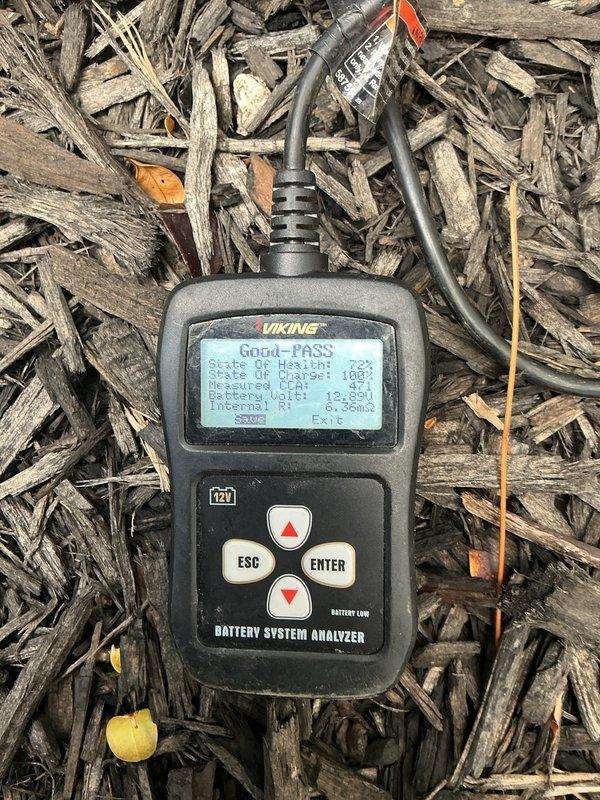

Performed scheduled maintenance on a Generac standby generator, including a battery system analysis using a Viking battery analyzer. Results returned a passing status with 72% state of health, 100% state of charge, 471 measured CCA, 12.89V battery voltage, and 6.36mΩ internal resistance, confirming the battery is in serviceable condition and capable of reliable engine starting.


Performed a full heating tune-up on the gas furnace, including inspection of the cabinet, gas piping, electrical connections, and condensate drain components. Removed the flame sensor and cleaned carbon buildup and oxidation from the rod with an abrasive pad to ensure reliable flame detection and proper ignition. Furnace and surrounding components were found clean and free of visible rust or damage.


Inspected the exterior line set wall penetration and found it improperly sealed, with deteriorated putty, peeling backing material, and exposed gaps allowing pest entry into the basement. Removed the failed sealant and debris, then resealed the refrigerant line set penetration with appropriate exterior-grade sealant and duct seal to restore a weather- and pest-tight envelope. Verified no remaining openings around the line set or adjacent electrical conduit.


Installed a new 96% AFUE gas furnace, connecting it to the existing ductwork and wiring it through a fused electrical disconnect with flexible conduit. Integrated the unit with the existing Honeywell HZ311 three-zone control panel, securing the low-voltage control wiring to the ductwork and verifying proper zone, heat, cool, and fan operation.


Performed a heating-season tune-up on the furnace, inspecting the inducer motor assembly, pressure switches, wiring connections, and drain lines, and noting minor staining and corrosion on the cabinet floor and a fitting. Inspected the air filters and found one heavily loaded with dust and debris compared to the other, indicating replacement or cleaning is recommended to maintain proper airflow and system efficiency.


Performed scheduled heating maintenance on the furnace, including a borescope inspection of the internal passages that revealed light rust and mineral staining along the interior wall. Inspected the draft inducer motor assembly, verifying pressure switch wiring and connections and noting debris and dust buildup on the cabinet floor, and confirmed the system is operating properly.