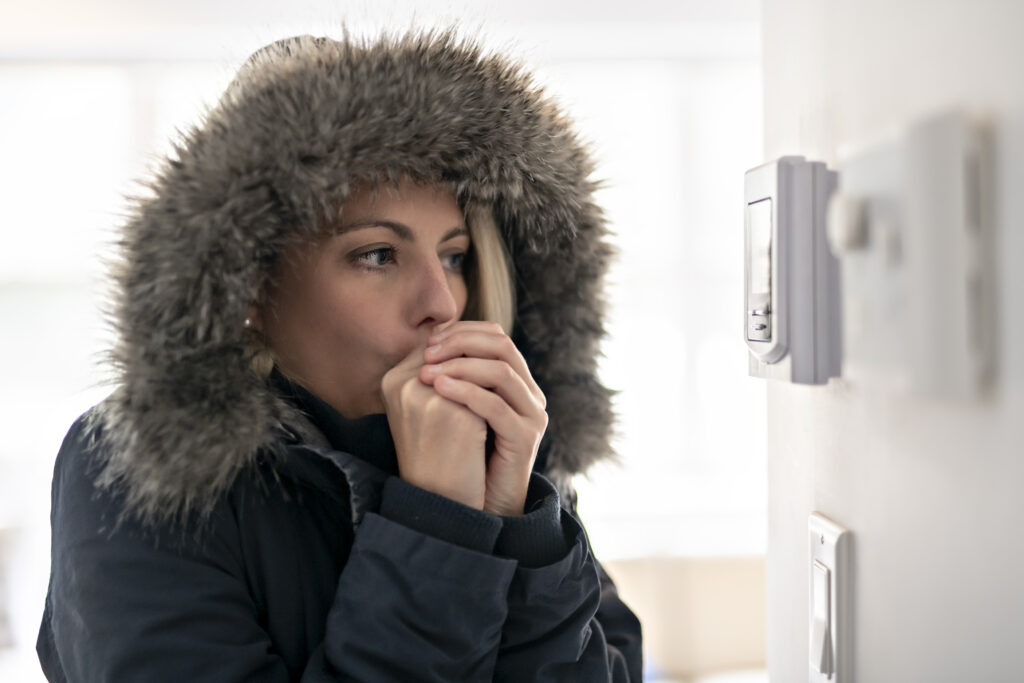
When temperatures drop in the Greater Cleveland area, nothing is more frustrating than a furnace that shuts on and off without ever fully heating your home. This issue, known as short-cycling, is usually a safety response, aimed at reducing strain and preventing overheating. Because the furnace never completes a full heating cycle, your comfort is compromised.
In this article, the HVAC experts at P.K. Wadsworth Heating & Cooling discuss the most common causes of furnace short cycling, along with why furnace repairs are key.
What Is Short-Cycling?
A standard furnace heating cycle is a sequence designed to heat your home safely and efficiently. It starts when the thermostat calls for heat, causing the igniter to light the burners and for the heat exchanger to warm up. The blower motor then turns on and the system runs continuously until the desired temperature of the home is reached. Typically, this lasts 10-20 minutes.
When a furnace short-cycles, it turns on and off repeatedly without completing a full cycle. As a result, it can’t effectively heat your home and is often a safety response or sign that your system is overheating, misreading temperatures, or struggling to properly move air.
Why You Should Not Ignore Short-Cycling
Short-cycling more than just indicates poor performance and energy-efficiency; it can also lead to complete failure if not addressed. Ignoring this issue can lead to serious problems like increased wear and tear, unexpected breakdowns in cold weather, higher energy bills, and more. To avoid these, schedule furnace repair at the first sign of issues.
Common Causes of Short-Cycling
Furnace Filter Needs Changing
Restricted airflow can cause a furnace to overheat. Most often, this is caused by dirty or clogged air filters. When these issues occur, the system may shut down as a safety measure, before restarting again once it has cooled. This results in a short-cycling pattern.
Incorrect Thermostat Settings
When your thermostat misreads the room temperature, it can signal the furnace to shut off too soon, resulting in short-cycling. Thermostats may have inaccurate temperature reads if they are improperly placed, have incorrect programming, or are too close to a heat source.
Clogged Flame Sensor
The flame sensor on a furnace ensures the burner is lit safely. When this sensor is dirty or covered in residue, it may tell the furnace that the burner isn’t lit. This then causes the furnace to shut down shortly after starting as a safety measure.
Faulty Limit Switch
One important safety design is the limit switch that monitors internal temperature. Its goal is to prevent overheating. If it is failing or overly sensitive, it may incorrectly signal overheating and cause the system to shut down prematurely.
Blower Motor Failure
When too much heat builds up in your furnace, it can trigger a safety shutoff and lead to short-cycling. This may happen when the blower motor isn’t moving enough air across the heat exchanger, allowing heat to increase too quickly.
Call P.K. Wadsworth For Furnace Repair
If your furnace is unable to run a full heat cycle, don’t delay. Contact P.K. Wadsworth Heating & Cooling for expert furnace repairs. As Cleveland, Ohio’s local home comfort provider since 1936, our highly-trained team is here to ensure that your heat is restored quickly. Plus, we offer same-day services to prioritize your total comfort.
Contact P.K. Wadsworth Heating & Cooling to schedule furnace repair in the Cleveland area.